Recap of Lesson 2
Here’s what we did last time: Given a circuit, find the transfer function . Assume we want to find .
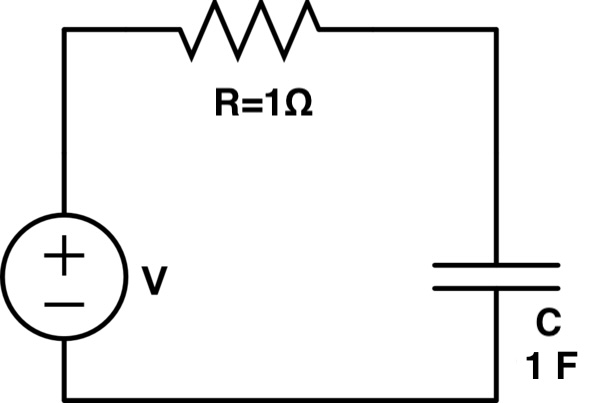
The transfer function is and you could draw a block diagram of it like this:
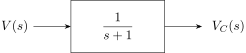
The skill we are practicing is to find the transfer function of the system
What’s the point? Once we know the transfer function, we can model the system output for any input using this form of the equation:
So for example, assume the input is . Then convert that to LaPlace (1), multiply through, and inverse LaPlace to get the time domain answer.
The inverse LaPlace is .
What if the input is instead? Same drill, but different values. The LaPlace of the unit step is , so
The inverse LaPlace is .
And so on…
We do this because we want to be able to (1) predict system behavior when it’s exposed to different inputs and (2) tune system behavior to what we want.